How to Count Calories in Indian Food: Complete Guide 2026
Introduction
Counting calories in Indian meals is a common question for beginners, students, and busy families who want health without sacrificing flavor. Indian cuisine offers diverse spices and portion sizes, which can make tracking feel overwhelming. This guide shows practical methods to estimate calories for roti, rice, dal, and sabzi, plus tips for accurate logging with an AI-powered photo app.
Understanding Staple Values for how to count calories Indian food
The first step is to know the baseline energy of core ingredients. Most meals revolve around wheat flour, rice, lentils, and vegetables.
- Wheat flour (atta) - ~340 kcal per 100 g (≈80 kcal per medium roti).
- White basmati rice - ~130 kcal per 100 g cooked; a cup (≈185 g) ≈240 kcal.
- Brown rice - ~110 kcal per 100 g cooked.
- Lentils (dal) - 110-150 kcal per 100 g cooked.
- Vegetables - 20-50 kcal per 100 g, but oil or nuts can double that.
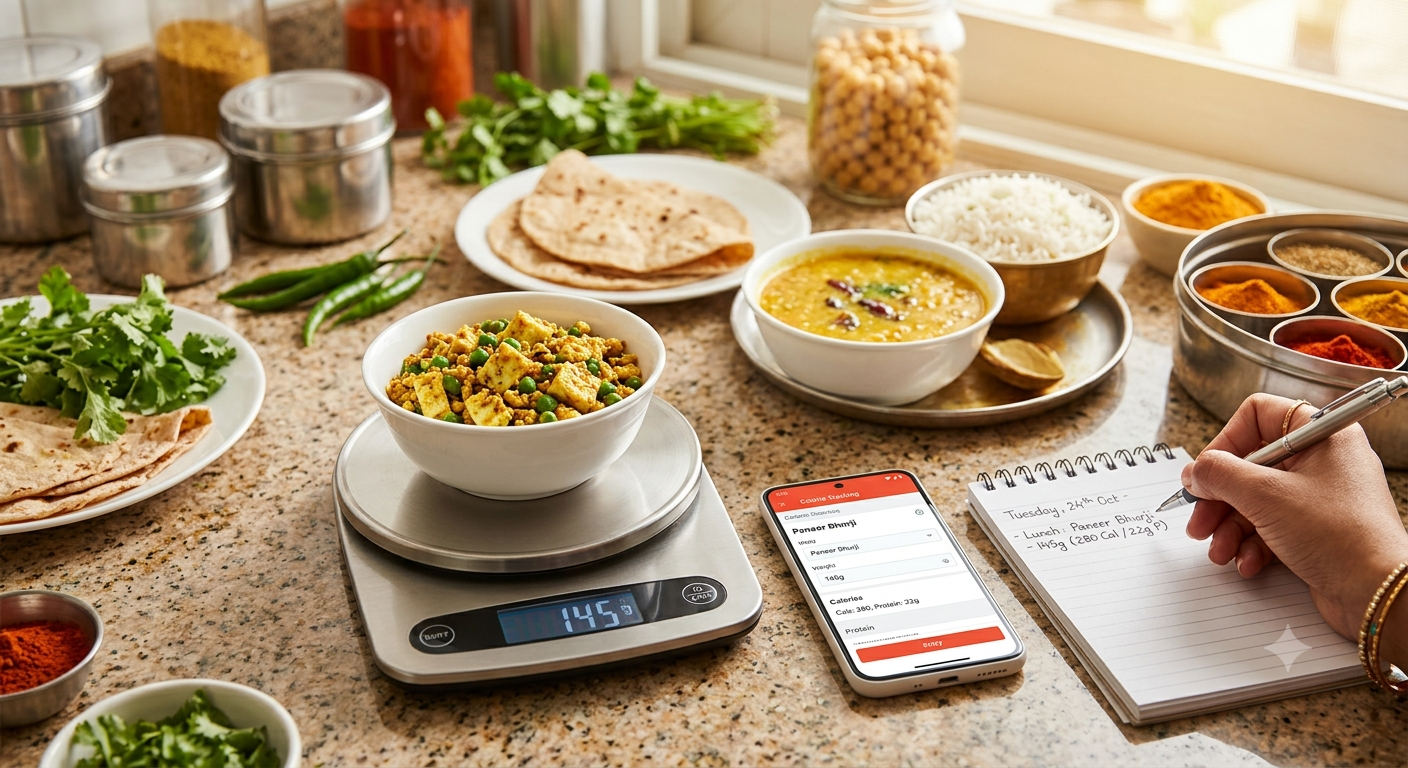
Note: Portion sizes vary; using a kitchen scale for the first few weeks helps calibrate your estimates.
Measuring Roti when you want to know how to count calories Indian food
When you wonder about the calorie count roti, size, thickness, and cooking method matter.
- Weigh the dough before shaping (30-35 g typical).
- Add oil/ghee if used: 1 tsp (5 g) ≈45 kcal.
- Visual cue: 6-inch roti ≈30 g; 8-inch ≈45 g.
Example - 6-inch roti, 30 g dough, dry pan: 30 g × 3.4 kcal/g = 102 kcal → ≈100 kcal. Add oil calories as needed. Nutoriq’s dal calculator can also handle mixed dishes, but a quick manual count works for roti.
Additional tip: If you prefer a softer texture, lightly brush the cooked roti with a few drops of melted ghee; just remember to log those extra calories. Over time you’ll develop an intuition for how much fat a typical roti absorbs.
Estimating Rice Calories for how to count calories Indian food
Rice is the backbone of many meals, and its energy varies by type and cooking fat.
White basmati
- kcal/100 g cooked: 130
- Typical Serving (cup): 240 kcal
- Notes: Fluffy, low-glycemic when cooled
Brown basmati
- kcal/100 g cooked: 110
- Typical Serving (cup): 200 kcal
- Notes: Higher fiber
Parboiled
- kcal/100 g cooked: 115
- Typical Serving (cup): 210 kcal
- Notes: Firmer texture
Poha
- kcal/100 g cooked: 130
- Typical Serving (cup): 230 kcal
- Notes: Often cooked with oil
How to calculate - measure cooked rice (≈185 g) and multiply by the kcal/100 g value, then add any cooking fat. A cup of basmati with 1 tsp oil totals ≈285 kcal. Snap a photo in Nutoriq - the AI recognises the rice type and adds oil automatically.
Pro tip: Let cooked rice cool for 15-20 minutes before photographing; the app distinguishes grains better and can suggest a lower glycemic estimate for cooled rice.
Counting Dal Calories
Dal’s protein content varies by lentil type and tempering.
- Identify the lentil (moong ≈110 kcal/100 g, toor ≈130 kcal).
- Measure cooked weight (½ cup ≈120 g).
- Add tempering: 1 tsp oil/ghee ≈45 kcal, plus onions/tomatoes ≈15 kcal.
Sample - ½ cup toor dal with 1 tsp oil: 120 g × 1.3 kcal/g = 156 kcal + 45 kcal = ≈200 kcal. Nutoriq’s image recognition adjusts for creamy vs. dry dal.
Remember: A splash of lemon juice adds negligible calories but can improve satiety, helping you stick to portion goals.
Counting Sabzi Calories
Vegetable curries are tricky because the same veg can appear in dry, creamy, or fried forms.
- Base veg: 20-30 kcal per 100 g for non-starchy varieties.
- Oil: each tsp adds 45 kcal; many recipes use 1-2 tsp.
- Dairy: cream, paneer, or coconut milk add 50-100 kcal per ¼ cup.
Example - aloo gobi with 1 tsp oil: potatoes 77 kcal + cauliflower 25 kcal + oil 45 kcal = ≈147 kcal per cup. A clear photo lets Nutoriq factor visible oil sheen for better accuracy.
Extra insight: Stir-frying vegetables quickly over high heat preserves texture and reduces the amount of oil needed, which can shave 30-50 kcal per serving.
FAQs
How many calories are in a roti? A 6-inch roti (30 g flour) ≈100 kcal; add 1 tsp oil → ≈145 kcal.
What is the calorie count of cooked basmati rice per cup? ≈240 kcal plain; with 1 tsp oil → ≈285 kcal.
How many calories are in a typical serving of dal? ½ cup cooked toor dal ≈156 kcal; with tadka → ≈200 kcal.
Do different vegetables have different calorie values in sabzi? Yes - leafy greens ~23 kcal/100 g, potatoes ~77 kcal/100 g; oil and dairy significantly increase totals.
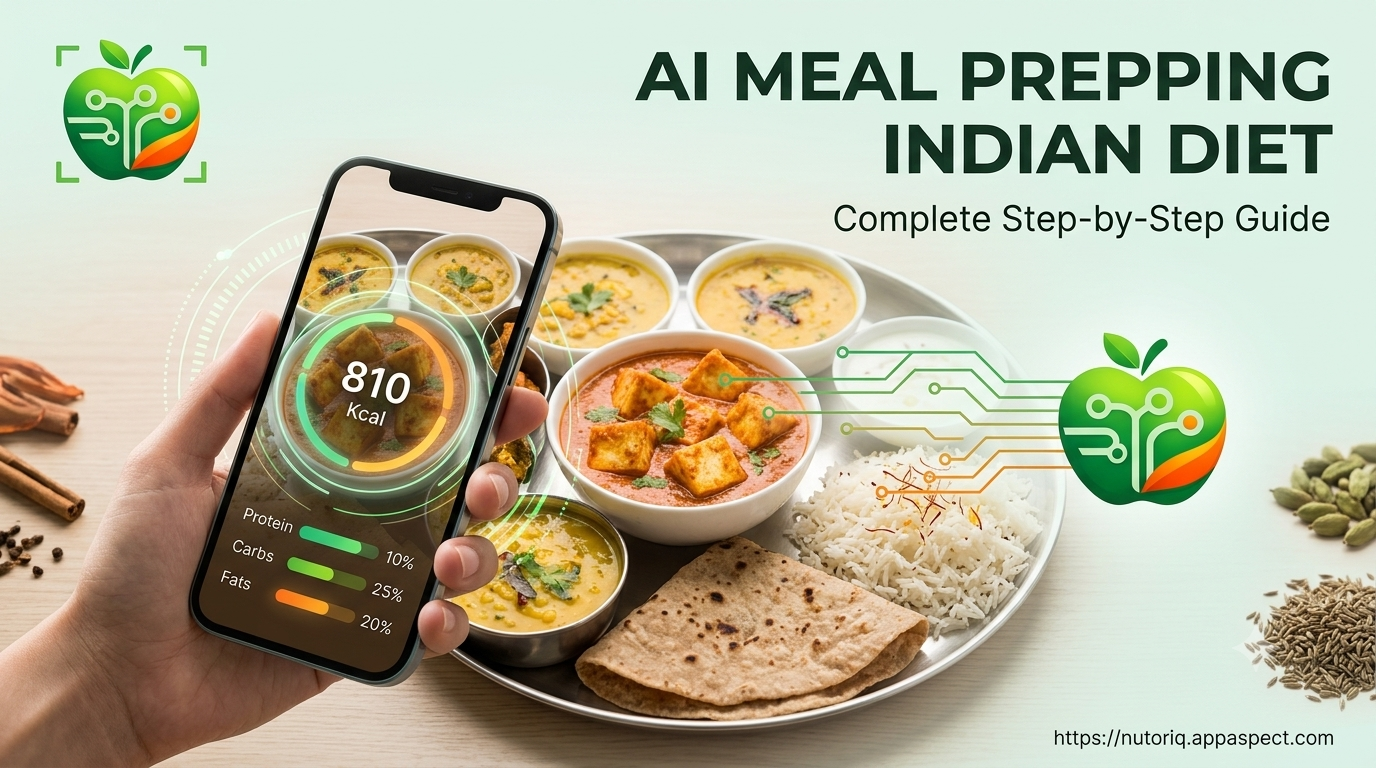
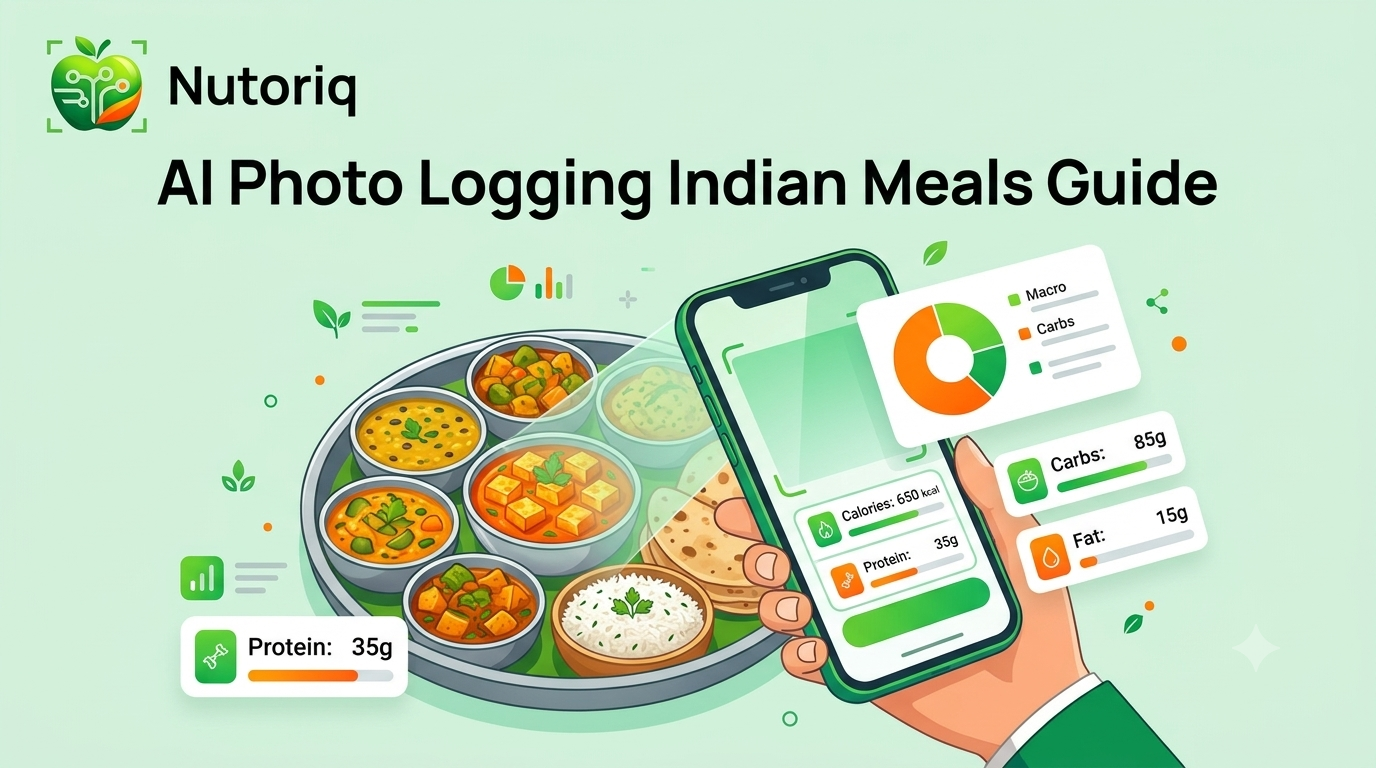
Can I use a photo app to estimate calories in Indian food? Absolutely. Nutoriq - AI Calorie Tracker lets you snap any dish and instantly receives a detailed nutrient breakdown.
Key Takeaways
- Know baseline values for roti, rice, dal, and sabzi to speed up manual logging.
- Use a scale or visual cues until you’re comfortable estimating portions.
- Add oil, ghee, and dairy calories separately - they often account for 30-50% of a dish’s total.
- Leverage Nutoriq’s photo feature for quick, accurate Indian food nutrition tracking.
- Review logs regularly to spot patterns and adjust portions for long-term success.
Conclusion
Tracking calories in Indian cuisine doesn’t require a nutrition degree - just staple knowledge, mindful portions, and the right tool. Apply these methods and you’ll log meals confidently while preserving tradition.
Get Started with Nutoriq
Ready to simplify your calorie-counting journey? Nutoriq - AI Calorie Tracker logs meals with a single photo, delivering instant calorie breakdowns for every Indian dish you love. Start today.